Italy Gives Final Approval to Measures on Fair Pay and Employment

On June 27, 2026, Law No. 112 of June 25, 2026, was published in the Gazzetta Ufficiale, converting Decreto-legge 30 aprile 2026, n. 62 into law with amendments. The decree-law itself has been in force since May 1, 2026, and regulates fair remuneration, employment incentives, and measures to combat digital caporalato — labor exploitation through digital platforms. The amendments introduced during conversion entered into force on June 28.
The coordinated text of Decree-Law No. 62 following its conversion comprises five chapters: employment incentives, provisions on fair remuneration, measures to prevent digital caporalato, additional urgent measures, and final provisions.
What Constitutes Fair Remuneration?
The law establishes collective bargaining agreements as the primary instrument for determining fair remuneration. Total compensation must be proportionate to the quantity and quality of work performed, with national collective bargaining agreements concluded by the most representative employers' and workers' organizations serving as the benchmark.
The calculation includes regular direct and indirect payments, additional monthly salary payments, fixed allowances, and social security benefits provided for under the collective bargaining agreement. To qualify for the statutory incentives, employers must ensure that employees' actual remuneration is not below the prescribed level.
Employers Receive New Hiring Incentives
Private-sector employers are eligible for social security contribution relief when hiring certain categories of women and young workers on permanent contracts. When hiring disadvantaged women, the contribution exemption may reach 100% and apply for up to 24 months, subject to statutory limits.
A similar incentive is available for hiring certain categories of workers under the age of 35. It may also be granted for up to 24 months, while the maximum monthly benefit depends, among other factors, on the geographical location of the workplace.
A separate measure aims to promote employment stability. When certain fixed-term contracts lasting no more than 12 months are converted into permanent contracts, employers may receive an exemption from social security contributions of up to EUR 500 per month for up to 24 months. The incentive applies to certain workers under the age of 35 and is subject to additional conditions.
Stronger Protections for Digital Platform Workers
The classification of platform workers now takes into account the actual conditions under which work is performed, rather than solely the formal designation of the contract. Where the circumstances indicate that the platform exercises direction and control, including through automated systems, the employment relationship may be presumed to constitute subordinate employment unless proven otherwise.
Platforms are required to provide workers with clear information about the algorithms used to allocate tasks, determine remuneration, evaluate performance, and restrict access to the service. Workers also have the right to request an explanation and human review of certain decisions made by automated systems.
In addition, platforms must retain records of assignments, refusals, working hours, and payments for at least five years and make this information available to workers and supervisory authorities. Additional requirements are being introduced for delivery riders concerning account identification, recording completed deliveries, and occupational safety training.
The new provisions therefore link government employment incentives to compliance with remuneration requirements, support the transition to permanent employment relationships, and strengthen oversight of working conditions on digital platforms.
More news:

The International Olympic Committee awarded the Olympic Cup to the people of Italy in recognition of their support for Milano Cortina 2026 and the contributions of citizens and volunteers to the organization of the Games.
Read article
Italy supported the conclusion of negotiations on the EU–India free trade agreement. The agreement provides for reducing trade barriers and creating new opportunities for Italian exporters.
Read article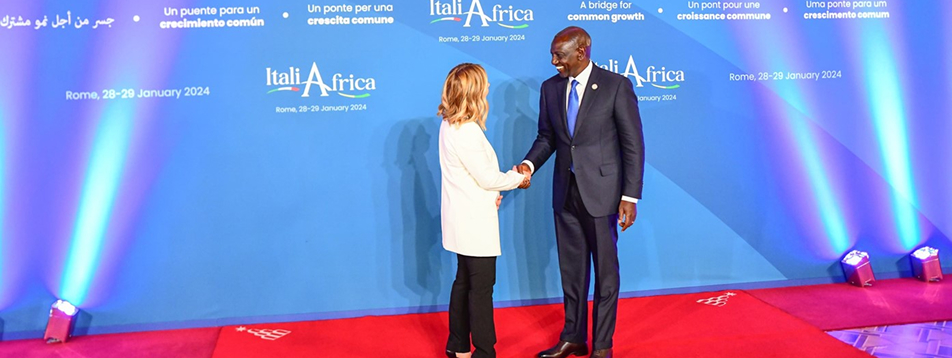
Italy Africa Business Week brought together representatives of government institutions, businesses, and international organizations to discuss investment, energy, healthcare, infrastructure, and green finance.
Read article