People and the Russian-Speaking Community in Italy
Italy's history is shaped by the lives of individuals, cultural connections, and communities that developed in different cities and historical periods. This section brings together information about notable Italians, documented connections between Italy and Russian and Russian-speaking culture, and contemporary schools, clubs, and organizations.
Understanding People and communities without Generalizations
On Italiani all'estero, the term "Russian-speaking community" describes a linguistic and social environment rather than an individual's citizenship or ethnic origin.
It is important to distinguish between:
- a person's country of birth;
- the language a person speaks;
- citizenship — legal membership of a state;
- self-identification — how individuals define their own cultural or community affiliation;
- organizational membership — formal or verified participation in a specific association, school, club, or other organization.
These characteristics may be combined in different ways. For example, citizenship of a particular country does not, in itself, establish a person's native language or whether they identify as part of the Russian-speaking community.
This distinction is particularly important when interpreting statistics. ISTAT allows Italy's population to be analyzed by citizenship, country of birth, and area of residence, among other characteristics. However, these indicators cannot automatically be presented as the size of the Russian-speaking population. ISTAT's demographic database maintains these categories separately.
Italiani all'estero does not claim to represent all Russian-speaking people in Italy. The views of individual organizations, authors, and participants are identified as their own.
Italians who shaped culture and society
This section presents the stories of Italians who made significant contributions to literature, science, art, education, and public life. Discover what they are known for, how their work influenced Italy, and why their legacy remains important today.
Russian-Italian Cultural Connections
Italy's connections with Russian and Russian-speaking culture developed through the travels of writers and artists, literature, translation, libraries, museums, and academic research.
In this section, we identify the specific person, work, institution, city, and historical period whenever the connection is supported by a source. Contemporary symbolic interpretations are not presented as substitutes for documented historical facts.
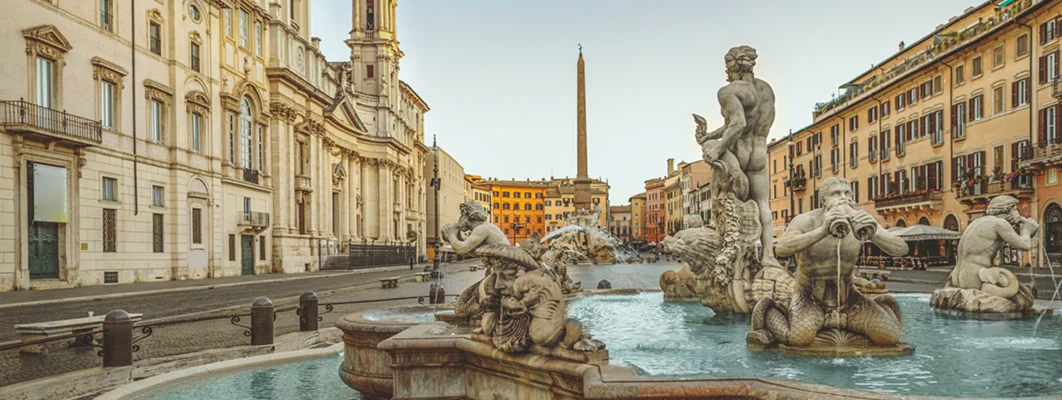
During the 19th and early 20th centuries, Rome became one of the centers of activity for Russian writers, artists, and émigré cultural circles. Today, the National Central Library of Rome houses, among other collections, the holdings of the historic Gogol Library, established in Rome in 1902 and associated with the Russian émigré community.
The collection forms part of the library's broader Slavic holdings and provides documentary evidence of the history of this cultural presence without reducing it to contemporary political or national categories.
Venice occupies a distinctive place in Joseph Brodsky's creative biography. Treccani notes his visits to the city over many years and examines his work Fondamenta degli incurabili in the context of the literary portrayal of Venice.
The city became an important subject of his essays and poetry. Brodsky wrote about Venetian architecture, water, light, and the distinctive atmosphere of Venice in winter. In Fondamenta degli incurabili, personal memories of the city are interwoven with reflections on time, memory, beauty, and art.
In 2016, the Uffizi Galleries and the Pushkin State Museum of Fine Arts signed a cooperation agreement providing for joint museum activities and cultural projects. One of the first outcomes was an exhibition program dedicated to Raphael.
The agreement established a framework for the exchange of artworks, academic cooperation, and the preparation of joint exhibitions. Such projects became examples of direct collaboration between Italian and Russian museum institutions in the fields of art and cultural heritage research.
History and Geography of the Russian-Speaking Presence
Communities associated with the Russian language and culture have existed in Italy for several generations. Their histories developed differently from city to city: some emerged around literature and art, while others formed around émigré associations, translation activities, libraries, and cultural institutions.
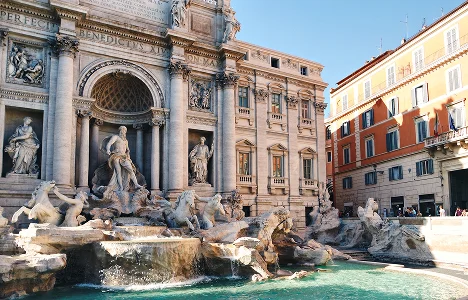
Between 1900 and 1940, an active Russian community existed in Rome. The National Central Library of Rome documents the activities of the Gogol Library, the Leo Tolstoy Cultural Association, the Slovo publishing house and bookshop, as well as theatres, restaurants, and other meeting places established by people from Russia. This community included writers, journalists, actors, artists, and political émigrés.
Materials documenting this period are preserved in the Slavic holdings of the National Central Library of Rome, particularly in the collection of the historic Gogol Library.
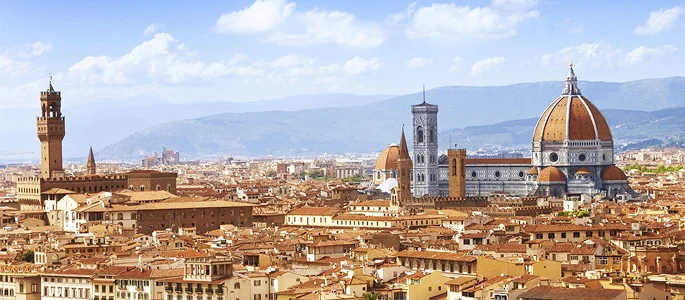
A notable Russian community also existed in Florence during the 20th century. SIUSA, the Italian Ministry of Culture's archival information system, documents the activities of the Association for Assistance to Russian Émigrés, which had already become one of the focal points of the local community in the 1920s. Nina Kharkevich, a physician, writer, and artist who was born and lived in Florence, was associated with the organization.
Another important figure was translator Maria Olsufieva. She lived in Florence, participated in the local Russian community, and translated works by Bulgakov, Pasternak, Solzhenitsyn, Mandelstam, and other authors into Italian. Her biography demonstrates how Russian-Italian cultural connections continued in Florence during the second half of the 20th century through translation, education, and personal contacts between intellectual circles in the two countries.
The Russian-speaking presence in Italy developed during different historical periods and was not associated with a single city or wave of migration. Archival materials reveal individual historical centers, while official demographic statistics make it possible to examine the contemporary geographical distribution.
As of January 1, 2025, Italy was home to 43,119 residents holding citizenship of the Russian Federation. The largest number lived in Lombardy: 10,296 people, representing almost one-quarter of all Russian citizens residing in the country. This was followed by Lazio with 4,274, Emilia-Romagna with 4,263, Tuscany with 3,670, Piedmont with 3,007, Campania with 2,917, and Veneto with 2,884 residents.
At the city level, Milan and Rome stand out, with 3,142 and 2,480 residents holding Russian citizenship, respectively. In the capital's metropolitan area, the population is concentrated primarily in Rome itself: 3,525 Russian citizens were registered across the entire Metropolitan City of Rome Capital. The Metropolitan City of Milan had 4,704 residents.
This population group has grown in recent years. Italy registered 37,424 Russian citizens in 2020, 39,705 in 2023, 41,631 in 2024, and 43,119 in 2025. Growth was particularly noticeable in Lombardy, where the number increased from 8,417 in 2020 to 10,296 in 2025.
These figures do not indicate the exact number of Russian-speaking residents in Italy. Citizenship and language are different characteristics: Russian speakers may be citizens of Italy, Belarus, Kazakhstan, Ukraine, and other countries, while a Russian citizen does not necessarily identify as part of the Russian-speaking community.
Material evidence of Russian-Italian cultural connections has been preserved in Italian museum and church collections. Palazzo Pitti in Florence houses Russian icons, including a 17th-century Dormition of the Mother of God and an icon of Saint Catherine of Alexandria created in Saint Petersburg by Ivan Galkin in 1909. In Venice, the Church of San Martino Vescovo on the island of Burano preserves a 19th-century Russian icon of Our Lady of Kazan. These objects attest to the presence of Russian artistic traditions within Italy's cultural heritage.
Contemporary Organizations, Schools, and Clubs
Schools and cultural associations operate in various Italian cities, offering opportunities to study Russian, support bilingual development among children, and participate in creative classes and cultural projects. Below are specific organizations with active programs and official websites.
Official Website:
Parola RussaThe school was founded by parents and teachers to provide Russian language education and introduce children to Russian culture. It offers preschool, primary, and secondary-level groups, with classes held on Saturdays. The curriculum includes Russian language, literature, history, art, and music. Additional activities include theatre, chess, piano, drawing, and sculpture. Russian as a foreign language is also offered to adults.
Official Website:
Centro Culturale Russo di FirenzeThe center operates the Raduga school, where children study Russian, reading, and writing, and learn about history and culture. For the 2026/2027 academic year, the center's website provides separate pages for schedules and enrollment. Programs for teenagers and adults, creative workshops, summer activities, and seminars are also listed. The center organizes literary meetings, cultural events, and language courses.
Official Website:
Istituto di Cultura e Lingua RussaIn 2026, the institute continues to offer language and cultural programs. Pre-enrollment is open for 100-hour Russian language courses, available both in person and online, for the 2026/2027 academic year. The institute also organizes introductory classes, literary meetings, and conferences. Its website features separate Italian language courses for Russian speakers.
How to Join
Participation in the community can begin by choosing an organization, event, or active program. On our website, you can first explore verified opportunities for participation, then learn about the goals of Italiani all'estero and submit an application.
Find an Organization or Project
Explore schools, clubs, cultural initiatives, and other verified organizations by city and type of activity.
Learn About the Goals of Italiani all'estero
Before joining, you can review the organization's approved objectives, areas of activity, and current programs.
Submit an Application to Participate
If the participation format and membership conditions meet your needs, proceed to the official Italiani all'estero application form. The form requests only the information required under the approved membership rules and for the necessary purposes of data processing. *
* The form requests only information provided for by the approved entry rules and the necessary purposes of data processing.